

Tamarind Extract Market US$ 605.8 Mn by 2033 Driven by Food Beverage and Pharma Demand
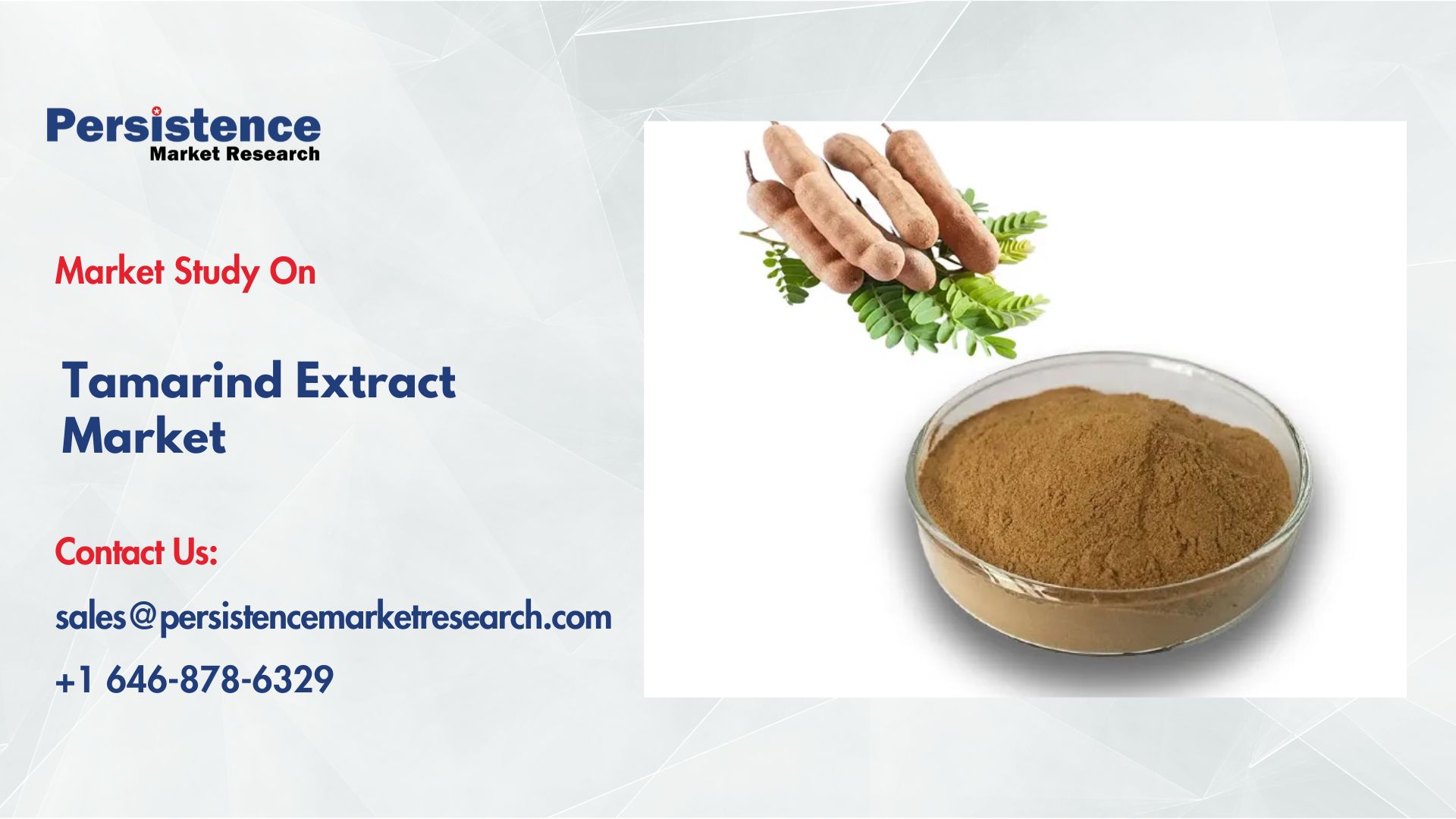
The global tamarind extract market is projected to grow from US$ 395.0 Mn in 2026 to US$ 605.8 Mn by 2033, at a CAGR of 6.3%, forecast 2033
BRENTFORD, ENGLAND, UNITED KINGDOM, February 2, 2026 /EINPresswire.com/ -- The global tamarind extract market is poised for strong and sustained growth over the coming years, driven by increasing demand for natural food ingredients, expanding applications across food and beverage, pharmaceuticals, and cosmetics, and rising consumer preference for plant-based and clean-label products. Industry assessments indicate that the global tamarind extract market is valued at approximately US$ 395.0 million in 2026 and is projected to reach US$ 605.8 million by 2033, registering a compound annual growth rate (CAGR) of 6.3% during the forecast period from 2026 to 2033.
Tamarind extract, derived from the fruit pulp of Tamarindus indica, is widely recognized for its distinctive sweet-and-sour flavor profile, rich organic acid content, and functional health properties. Traditionally used in culinary applications across Asia, Africa, and Latin America, tamarind extract has evolved into a versatile ingredient with growing relevance in modern food formulations, nutraceuticals, pharmaceuticals, and personal care products.
The market’s growth trajectory is further supported by increasing awareness of the antioxidant, digestive, and anti-inflammatory properties of tamarind extract. As manufacturers seek to replace synthetic additives with natural alternatives, tamarind extract is gaining prominence as a flavoring agent, acidulant, and functional ingredient. The forecast period is expected to witness continued expansion, underpinned by innovation, product diversification, and rising penetration in developed and emerging markets alike.
Get Your FREE Sample Report Instantly – Click Now: https://www.persistencemarketresearch.com/samples/24229
Key Factors Driving Market Growth
Several interconnected factors are contributing to the accelerated growth of the global tamarind extract market. One of the primary drivers is the global shift toward natural and plant-based ingredients in food and beverage products. Consumers are increasingly scrutinizing product labels and favoring formulations free from artificial flavors, preservatives, and colorants. Tamarind extract, with its natural origin and multifunctional properties, aligns well with these evolving consumer preferences.
The growing popularity of ethnic and traditional cuisines on a global scale is another important growth catalyst. Tamarind has long been a staple ingredient in Asian, Middle Eastern, African, and Latin American cuisines, and its rising adoption in international foodservice chains and packaged foods is driving incremental demand for tamarind extract in standardized, easy-to-use forms.
Segmentation Analysis
By Source Type
• Organic Tamarind Extract
• Conventional Tamarind Extract
By Application
• Food & Beverages
• Cosmetics & Personal Care
• Pharmaceuticals
• Animal Feed
By End-User
• Food Manufacturers
• Cosmetic Manufacturers
• Pharmaceutical Companies
• Healthcare Sector
• Research Institutions
Need Tailored Insights? Request Customization Now: https://www.persistencemarketresearch.com/request-customization/24229
Regional Insights
Leading Regional Markets
From a regional perspective, Asia Pacific dominates the global tamarind extract market, accounting for the largest share in terms of both production and consumption. The region benefits from abundant raw material availability, long-standing culinary traditions, and strong domestic demand across countries such as India, Thailand, Indonesia, and the Philippines. India, in particular, plays a central role as a major producer and exporter of tamarind and tamarind-based products.
Latin America and Africa also represent important regional markets, supported by native tamarind cultivation and traditional usage patterns. In these regions, tamarind extract is widely consumed in beverages, sauces, and local medicinal preparations, providing a stable demand base.
Unique Features and Innovations in the Market
The modern tamarind extract market is characterized by continuous innovation aimed at improving product quality, functionality, and application versatility. One of the key differentiators is the development of standardized extracts with consistent acidity, flavor intensity, and bioactive compound profiles. These standardized products enable manufacturers to achieve greater formulation accuracy and product uniformity.
Technological advancements are playing an increasingly important role in market evolution. The use of artificial intelligence (AI) and data analytics in process optimization allows producers to fine-tune extraction parameters, improve yield efficiency, and reduce raw material wastage. Internet of Things (IoT)-enabled monitoring systems are being deployed to track temperature, humidity, and quality metrics throughout the production and storage process, ensuring compliance with food safety and quality standards.
Market Highlights
The growing adoption of tamarind extract across multiple industries is driven by a combination of functional benefits, regulatory alignment, and sustainability considerations. For food and beverage manufacturers, tamarind extract offers a natural alternative to synthetic acidulants and flavor enhancers, supporting clean-label and organic product positioning.
Regulatory frameworks favoring natural ingredients and stricter controls on artificial additives are further encouraging the use of tamarind extract in commercial formulations. In many markets, regulatory bodies are promoting the inclusion of plant-based ingredients with established safety profiles, creating a favorable environment for market growth.
Secure Your Full Report – Proceed to Checkout: https://www.persistencemarketresearch.com/checkout/24229
Key Players and Competitive Landscape
• Synthite Group
• MartinBauer
• Indena S.p.A.
• Nexira
• Arjuna Natural
• Kalsec Inc.
• Botanic Healthcare.
• Sabinsa Corporation
• Sophix Natural
Future Opportunities and Growth Prospects
Looking ahead, the global tamarind extract market is expected to benefit from expanding application scope, technological advancements, and evolving consumer preferences. Opportunities are emerging in functional foods, ready-to-drink beverages, and plant-based supplements, where tamarind extract’s flavor and health attributes can be effectively leveraged.
The continued evolution of extraction and processing technologies is likely to enhance product quality and unlock new functional applications. At the same time, increasing regulatory emphasis on natural, traceable, and sustainably sourced ingredients will shape market dynamics and encourage responsible production practices.
As awareness of tamarind extract’s benefits grows and global supply chains become more integrated, the market is well positioned for long-term expansion. Companies that invest in innovation, quality assurance, and strategic market positioning are expected to capture significant value in this evolving global landscape.
Explore the Latest Trending Research Reports:
Europe Egg Replacement Ingredients Market: Europe egg replacement ingredients market size is likely to value at US$ 952.2 Mn in 2025 and expected to reach US$ 1,711.1 Mn by 2032 growing at a CAGR of 8.7% during the forecast period from 2025 to 2032.
Croscarmellose Sodium (CCS) Market: The global croscarmellose sodium market size is likely to be valued at US$ 288.7 Mn in 2025 and is expected to reach US$ 487.0 Mn by 2032 growing at a CAGR of 7.8% during the forecast period from 2025 to 2032
Aishwarya Doiphode
Persistence Market Research
+1 646-878-6329
email us here
Visit us on social media:
LinkedIn
Instagram
YouTube
X
Legal Disclaimer:
EIN Presswire provides this news content "as is" without warranty of any kind. We do not accept any responsibility or liability for the accuracy, content, images, videos, licenses, completeness, legality, or reliability of the information contained in this article. If you have any complaints or copyright issues related to this article, kindly contact the author above.
